Ragi
(finger millet) use in kidney disease

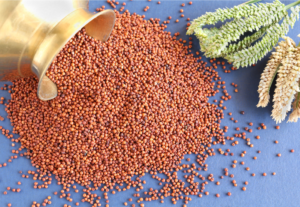
Ragi (finger millet) is a type of millet commonly used in several regions of India. Ragi is traditionally processed by many methods like malting, fermentation, and grinding to produce beverages, porridge, idli, dosa, and roti in India. Ragi is nutritionally superior to polished white rice. Patients with chronic kidney disease (CKD) and those on dialysis have special diet requirements because their kidneys are not fully functional. The components of the diet, like protein, phosphorus, sodium, and potassium, when in excess, can cause harm to these patients
If we look at the nutritional composition of ragi, it is a rich source of carbohydrates (72%) and has a dietary fiber of 11.5%. The fiber content of ragi is much higher than brown rice and polished rice. If we take 100 grams of the edible portion of ragi, it contains 72 grams of carbohydrates, 11.5 grams of fiber, 328 kcal of energy, 1.3 grams of fat, 7.3 grams of protein, 11mg of sodium, 408mg of potassium, 283 mg of phosphorus and 3.9mg of iron. 
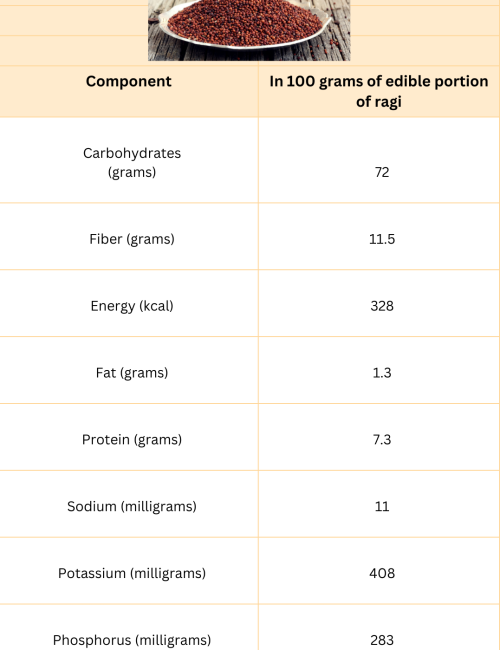
3.9

In patients with CKD and those on dialysis, phosphorus accumulates in the blood because kidneys can’t excrete it in the urine properly. So, if our diet contains high phosphorus, it accumulates in the blood and can lead to bone and heart problems. To prevent excess levels of phosphorus in the blood, phosphorus restriction is advised in patients with CKD with high phosphorus levels and those on dialysis. Ragi had 283mg of phosphorus in 100 grams of a portion which is a high value. In patients with CKD with high phosphorus values, their daily phosphorus intake is restricted to 800mg, which is for the whole day, including all the foods. So ragi consumption should be restricted in patients with higher phosphorus levels and patients with advanced stages of CKD on dialysis after consulting the nephrologist and dietician.

            High potassium levels are an important concern in patients with CKD and those on dialysis. Higher potassium levels beyond 5.5meq/L, there is decreased survival and increased risk of cardiac events. So, potassium levels should be maintained below 5meq/L, preferably in these patients (at least below 5.5meq/L). Potassium restriction of up to 3000mg per day is advised in patients with CKD. Ragi has 408mg of potassium per 100 grams, which makes it a high-potassium diet. A high-potassium diet is defined as something which contains more than 200mg of potassium per 100 grams. So, in patients on dialysis whose baseline potassium values are around 5 to 5.5 meq/L, it is better to restrict ragi intake to avoid hyperkalemia. Nephrologist and dietician advise in other patients with milder CKD is advised.

Dr.Kishore Kumar Ariga

Nephrologist and Kidney transplant physician

Dialysis headache

Headache is one of the most common complaint among chronic kidney disease (CKD) patients who are on hemodialysis (HD). Headache occurs in 27% to 70% of hemodialysis patients. We will discuss about the type of headache, causes and the ways to tackle this common problem among dialysis patients.

dialysis headache

Type of headache

Dialysis headache has the following features

  • Starts with mild pain and gradually becomes more severe
  • Pain is bifrontal (i.e., situated on both sides at the front of head)
  • Throbbing type (pulsating)
  • May worsen on lying down
  • If severe may lead to nausea and vomiting
  • Headache resolves within 72 hours of finishing the dialysis (usually resolves in few hours after dialysis session)
  • It may start during the dialysis or few hours after the end of dialysis session
  • Headache disappears after successful kidney transplantation

Causes of dialysis headache

Exact cause for hemodialysis headache is not clear yet but there are some factors which are associated with headache in these patients.

a)Blood pressure

Those patients with higher blood pressure values before dialysis had higher chance of dialysis head ache. Drop in blood pressure (Hypotension) during a dialysis session can also cause headache

b)Low magnesium levels

Low levels of magnesium in the blood have been associated with dialysis headache and there are reports of treatment of patients with magnesium supplements.

c)Change in urea levels before and after dialysis

Excessive decline in levels of urea before and after dialysis is considered as one of the triggering factors. Excess rapid decrease in urea levels may cause mild brain swelling which causes headache and gradually swelling decreases with resolution of pain.

d)Excessive coffee consumption

Caffeine withdrawal headache occurs within 24 hours of last consumption in people who consume 200mg of caffeine per day for more than 2 weeks. This is also seen in dialysis patients because caffeine is eliminated in dialysis leading to withdrawal.

e)Depression

Patients who have depressive symptoms have increased risk of pain in the body. Headache in turn may worsen depression in these patients.

f)Changes in the components of blood with dialysis

Studies have shown that changes in some protein components of the blood like gene-related peptide (CGRP), substance P with dialysis can trigger headache. Changes in nitric oxide levels are also associated with headache.

g)Raised intraocular pressure (Rare cause)

Rarely high intraocular pressure (high pressure in the eyes- glaucoma) during dialysis sessions can cause headache.

Impact of headache in dialysis patients

Severe and recurrent headache may lead to poor quality of life, depression and incomplete dialysis sessions. Incomplete dialysis sessions will lead to accumulation of water and waste products in the body.

Treatment

As there is no clarity regarding the exact cause of dialysis headache specific treatment option is not available and multiple medications are tried with variable success rates in these patients. Following measures can be tried to prevent and treat the headache.

  • Controlling blood pressures to appropriate level and prevention of drop in blood pressure during dialysis session
  • Checking levels of electrolytes Sodium, magnesium and correction of those abnormalities if present can help. Magnesium can be supplemented as tablets if there is deficiency
  • Advise patients to avoid excess coffee consumption to prevent withdrawal headache. If patient persistently consumes excessive coffee then a cup of coffee during dialysis can help in some patients if cause is attributed to coffee withdrawal
  • Treatment of depression can decrease bodily pain along with headache
  • Some medications like chlorpromazine before dialysis session, angiotension conveting enzyme inhibitors (fosinopril and lisinopril) and nortryptiline are tried in these patients but there is no strong evidence of clear benefit. They need to be taken only when prescribed and under nephrologist supervision as they can have unwanted adverse effects which may be serious sometimes.


Dr. Kishore Kumar Ariga

Nephrologist and renal transplant physician

PACE hospitals

Hyderabad

Itching in dialysis patients

itching in dialysis Itching (pruritus) is a common complaint among patients with chronic kidney disease especially in patients who are on dialysis. Surveys done in patients on dialysis about pruritus reported a prevalence between 20% to 60%. More importantly, patients who are suffering from itching do not complain about it to the medical staff. There is also a lack of awareness among the medical staff about itching and its management.
What causes itching in dialysis patients?

No single cause has been identified for itching in patients with chronic kidney disease. Many risk factors are associated with itching in patients on dialysis. They are

  1. Inadequate dialysis
  2. Dry skin
  3. Increased parathyroid hormone (PTH) levels
  4. Increased calcium and phosphorus levels in blood
  5. Increased magnesium and aluminum levels in blood

When and where in the body itching occurs?

The symptoms may be different in each patient.

  • It commonly affects back, but it may also affect legs, hands, head(scalp), trunk also. Sometimes discontinuous areas may be affected (example: face and leg).
  • Symptoms may be worse at night
  • Can lead to sleep deprivation
  • It is symmetrical (affecting both sides of body, example: right and left calves)
  • Itching is more after exposure to heat and stress
  • Skin generally looks normal and some patients have excessive scratching marks

Other causes of itching (like skin diseases, infections etc.,) needs to be considered if

  • Symptoms do not respond to treatment or
  • If there are any skin changes like rash etc., or
  • If itching is asymmetrical (like localized to a single area or one side of the body)

Management

Management of itching in dialysis patients needs optimizing the dialysis and correcting the laboratory abnormalities and treatment specific to itching.

Topical therapy

  • Application of coconut oil can relieve itching in some patients
  • Avoiding dryness of skin can help reducing the symptoms
  • Topical creams containing paraffin and high-water content application tend to relieve the symptoms of itching

Correcting laboratory abnormalities

  • Correction of calcium, phosphorus and parathyroid hormone levels if they are abnormal with medications can improve itching.

Adequate dialysis

  • Patients who are not on adequate dose of dialysis for them show improvement in itching on reaching their prescribed dialysis dose.
  • Some patients may respond by increasing further dose of dialysis.

Medications

  • If patients do not respond to above measures then medications are prescribed by treating nephrologist based on individual patient assessment.
  • Variety of medications and creams are used like
    • Gabapentin, pregabalin
    • Capsaicin cream
  • These medications are to be used only under supervision of treating nephrologist because of the side effects associated with them

Refractory cases

  • Few patients do not respond to any of the above measures. In such patients Ultraviolet B (UVB) phototherapy is tried.
  • Kidney transplantation is a definitive treatment of itching. There will be complete resolution of itching after kidney transplantation

Dr Kishore Kumar Ariga

Nephrologist and renal transplant physician

Constipation in chronic kidney disease

Constipation is a common health issue affecting all age groups of people with a higher rate of occurrence in older age group population. Constipation can reduce the quality of life and also social activities. Constipation is common problem in patients with chronic kidney disease (CKD) especially in those with advanced stage and those who are undergoing dialysis. Recent studies showed that constipation is associated with worsening of kidney function in patients with kidney disease, heart related events and mortality but confirmatory evidence is not yet available for the same.

How to diagnose constipation?

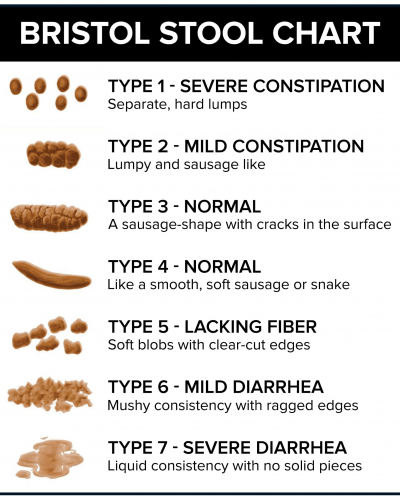
Constipation is change is bowel habits. Patients with constipation have less frequent stools (feces) usually less than 3 spontaneous stools per week. Stools can be difficult to pass and they can be lumpy or hard. There can be sensation of blockage at anus and incomplete evacuation.  Simple and objective way to diagnose constipation is via Bristol Stool Form Scale as shown in the figure below. Type 1 stool is severe constipation and type 2 stool is mild constipation.

Bristol-Stool-Chart

What are the reasons for constipation in CKD?
  1. Gut dysbiosis: It means change is the type of bacteria and function of bacteria in the intestines. In the intestines of patients with chronic constipation, good bacteria (e.g., Lactobacillus and Bifidobacterium genera) are decreased and problematic bacteria are increased. Good bacteria ferment the dietary plant derived carbohydrate to products which stimulate contraction of large intestine. As the good bacteria decreases constipation increases.
  2. Uremic toxins: Toxins accumulated in the body because of kidney dysfunction (also called as uremic toxins) cause motility problems in the large intestine leading to slow movement of stools. Large intestine receives approximately 1500ml of liquid from small intestine daily. Out of this, water and electrolytes are absorbed in large intestine and 200 – 400ml of water is excreted along with stools (feces). If there is slow movement in the large intestine, it will lead to more absorption of water and hard stools are formed which leads to constipation. As the stools stay for longer duration, amino acids in the stool are converted to uremic toxins which further affects the movement of stools leading to worsening of constipation.
  3. Life style: less physical activity in dialysis patients, improper use of laxatives and suppressing the urge to pass stools during dialysis sessions can promote constipation
  4. Medications: Blood pressure controlling medications (calcium channel blockers), potassium decreasing medications (resins), phosphorus controlling medications (e.g., sevelamer) and antidepressants can cause constipation
  5. Dietary restrictions: In advanced CKD, fiber rich vegetables and fruits are restricted for the fear of rise in potassium levels in blood. Water intake is also restricted particularly in patients on dialysis. Less fiber and fluid in the diet can cause constipation
Ways to deal with constipation?

Constipation in CKD patients is difficult to treat. The approach for treatment is multipronged targeting different aspects of etiology.

Life style and dietary changes

  • Regular exercises like walking can be effective in improving constipation. Walking can promote bowel movements and relieve constipation.
  • Movements in bowel are more after having meals. Making a routine to pass stools after meals can help people with constipation.
  • Defecation posture change may help in relief in some patients. The classic Indian style toilet requires the person to squat while passing stools. Because of the position of squatting, pressure increases inside rectum and decreases at anus leading to easy passage of stools. It will lead to more faster and complete emptying of stools. Gradually Indian style toilets are becoming rare with western style sitting type of toilets becoming more common. We can get similar effect of squatting by using a foot stool in front of western type of toilet so that legs get flexed.
  • Addition of vegetables and fruits with high fiber should be done after discussion with nephrologist and dietician and tailored based on the patient lab reports and requirements.

Probiotics and prebiotics

Probiotics are microorganisms which do benefit to the host on whom they reside. Prebiotics are components of food which are indigestible like fiber and complex starches which feed the probiotics. Studies done in patients with constipation and kidney disease have shown that supplementing prebiotics and probiotics have improved the constipation. Probiotics supplementation can be taken in the form of capsules after discussing with nephrologist. Probiotics are also available in other forms (e.g., yogurt). Before taking other forms of probiotics discussion with nephrologist and dietician is important because the source and dose to be taken of probiotics is important. For example, yogurt is derived from milk and excess milk product consumption in kidney failure patients is not recommended as it may increase phosphorus levels.

Laxatives

Laxatives are medications prescribed by doctors for the constipation. They are of various forms like syrup, liquid, powder or tablet. Commonly used laxatives are lactulose syrup which is available over the counter. Other commonly available laxatives like polyethylene glycol and psyllium need large quantity of water to be ingested along with them. Water restriction is important in the management of CKD patients so these options may not be best suited for them. Patients with kidney disease should be cautious about over the counter laxatives containing magnesium. Magnesium containing laxatives can lead to serious high levels of magnesium in the blood of these patients because kidneys in these patients cannot excrete the excess magnesium present in the laxative. If constipation is not relieved by life style modifications and changes in diet it is always necessary to contact the nephrologist for further medications before taking any over the counter preparations which are available.

                                                                                                        Dr Kishore Kumar Ariga

Nephrologist and renal transplant physician

How to collect a urine sample for testing?

Urine examination is commonly done as a part of a routine health check-up or to identify a specific condition related to the urinary tract or kidneys (urinary tract infection, blood in urine, or protein loss in urine). The best way to collect the urine sample for different indications to give accurate results will be explained below.

Urinary tract infection

The urine sample which is collected to evaluate for the identification of urinary tract infection should have minimal contamination by the bacteria which are normally present in the genital areas (distal urethra and genital mucosa). The sample collected should also represent the bacterial count in the bladder accurately.

Timing:

The urine sample collected while passing the first urine on awakening will have the highest possibility of detecting the bacterial infection. This is because bacteria in the bladder will have time to multiplicate in the urine overnight and the urine will be concentrated. At least for 4 to 8 hours urine should be in the bladder to demonstrate reliable bacterial growth. This way of collecting urine samples is not always possible as many a time we give the sample when we go to the doctor or lab for testing. The sample given later in the day will have a less bacterial count because of the dilute urine and washout while urinating previously during the day. Second voided urine in the day will serve the purpose for patients who are not in the hospital.

Method to collect urine:

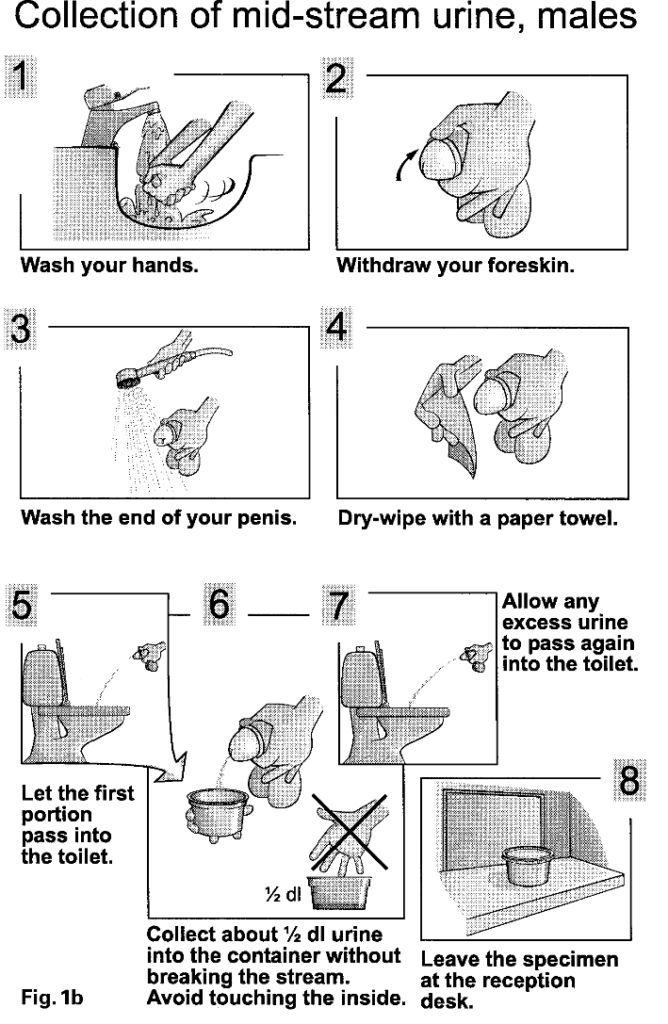
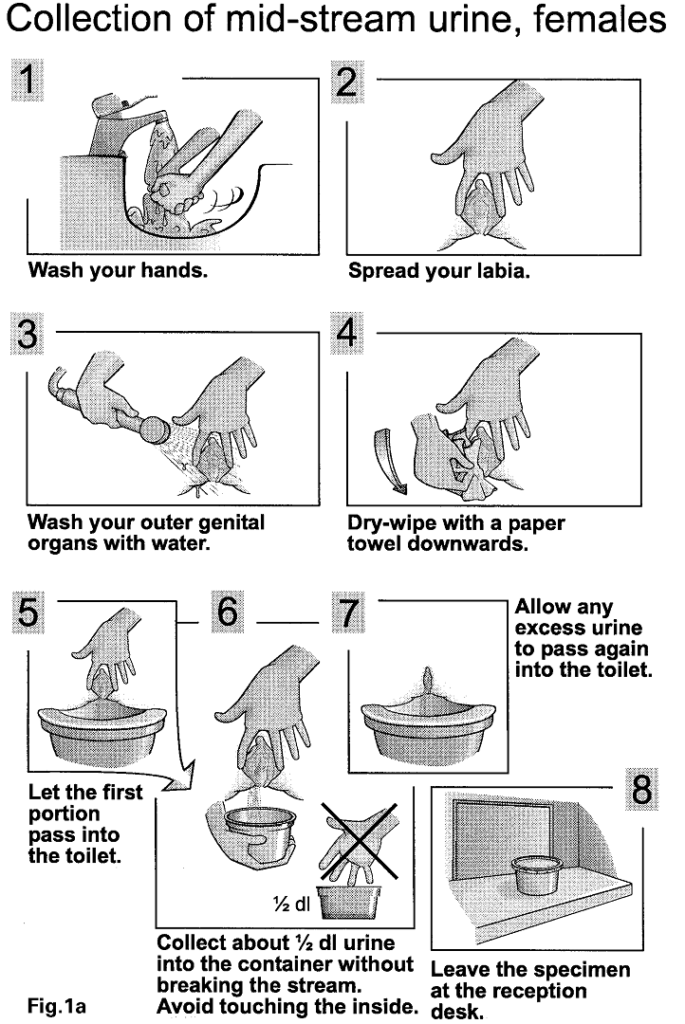
“clean-catch” and “mid-stream” are the words used to explain the method of urine collection for urinary tract infection testing. 

  • Foreskin of penis is pulled back in males and labia in females are spread 
  • Washing is done with water and wiped dry
  •  Now the urine should be passed. The initial stream of urine is to be discarded because it flushes the contents of the urethra. After the initial part of urine is discarded then the stream of urine which is next called midstream urine is collected in the sterile container provided.
Handling of the sample:

Once the urine is collected for a urine culture to identify UTI, it has to be sent to the lab immediately. This is because bacteria in the urine if present will multiplicate and will give results with increased bacterial counts. If we are unable to take the sample to the lab immediately it has to be stored in the refrigerator at 4-degree Celsius. While taking the sample to the lab, the urine container should be kept in a bag or container with cold water or ice cubes until it is delivered to the laboratory. Keeping at a cold temperature prevents the bacteria from multiplicating and increasing in number.


Male urine collection

Complete urine examination (CUE) 

Complete urine examination includes chemical analysis by dipstick examination and microscopic examination to look for cells and casts in the urine. For random CUE, 1 to 2 hours stay of urine in the bladder is enough for proper assessment. The method of collection of urine for CUE is the same as that for urine culture (to identify urinary tract infection) explained above because the same urine sample may be used to do a microscopic examination, chemical analysis, and urine culture.

24-hour urine collection

   24-hour urine is collected commonly to measure protein loss per day in the urine. The whole of urine should be collected during the 24 hours without fail. The amount of urine collected each time does not matter. Our aim is to collect the whole of the urine during the 24-hour duration. Following are the steps to collect the urine in 24 hours.

  • Once we wake up in the morning pass the urine for the first time and flush it in the toilet. Note down the time (example: 7.15am). From this time point we should collect whatever urine we pass in the next 24 hours.
  • Collect the urine in the container provided by the lab and store at room temperature or in the refrigerator.
  • In between while passing stools (feces) the urine passed should also be collected in the container. Avoid contamination with feces in the container.
  • Next morning, we should finish the sampling collection by collecting the first morning urine we pass. This last sample collection should be around the same time we initiated collection the previous day (between 7.05am to 7.20am).

Precautions to be taken

  • Sexual intercourse should be avoided one day prior as it will increase cells and protein in the urine
  • Menstrual blood during periods may contaminate the urine in females resulting in presence of red blood cells in the urine.

                                                                                             Dr Kishore Kumar Ariga

 Nephrologist and renal transplant physician